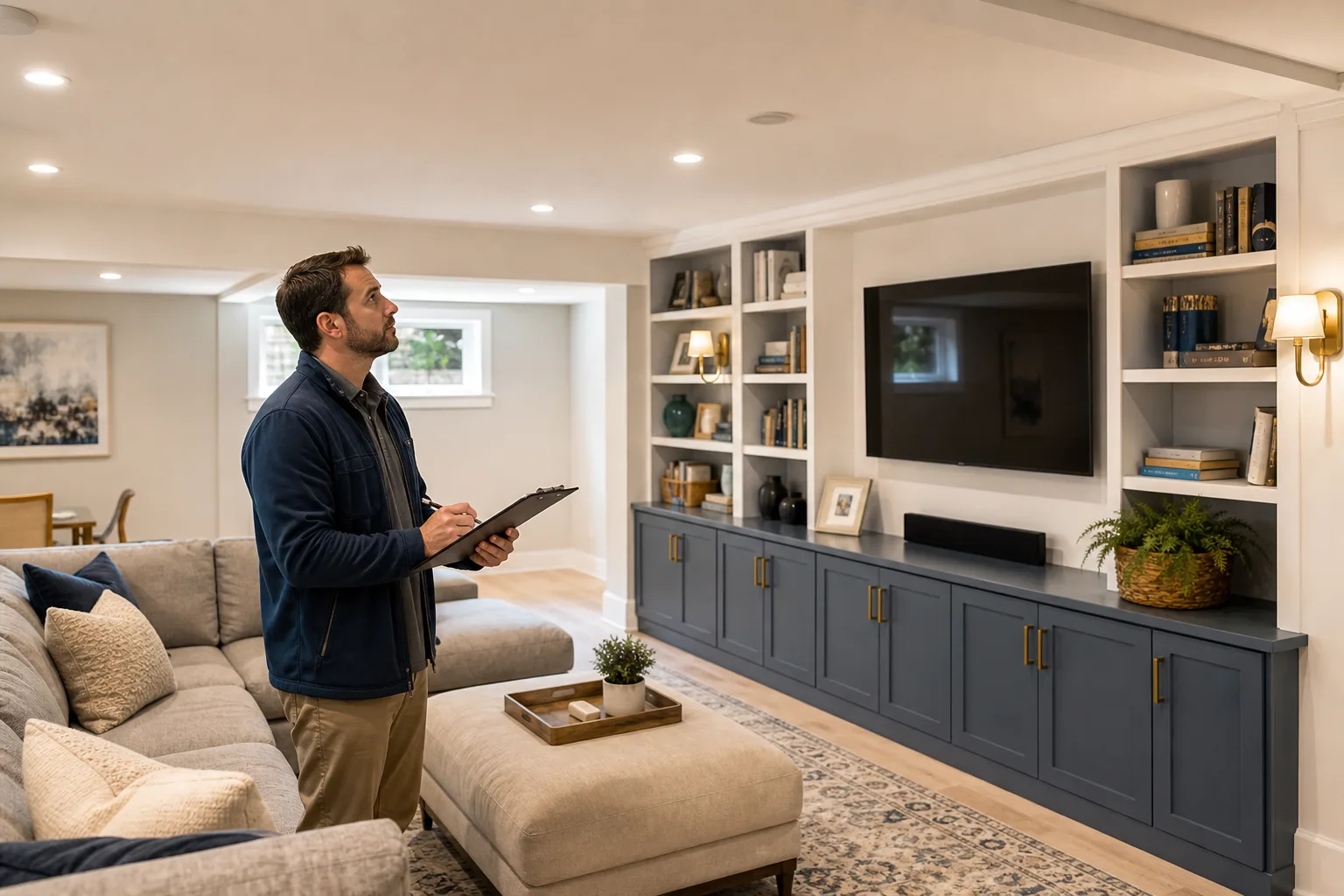
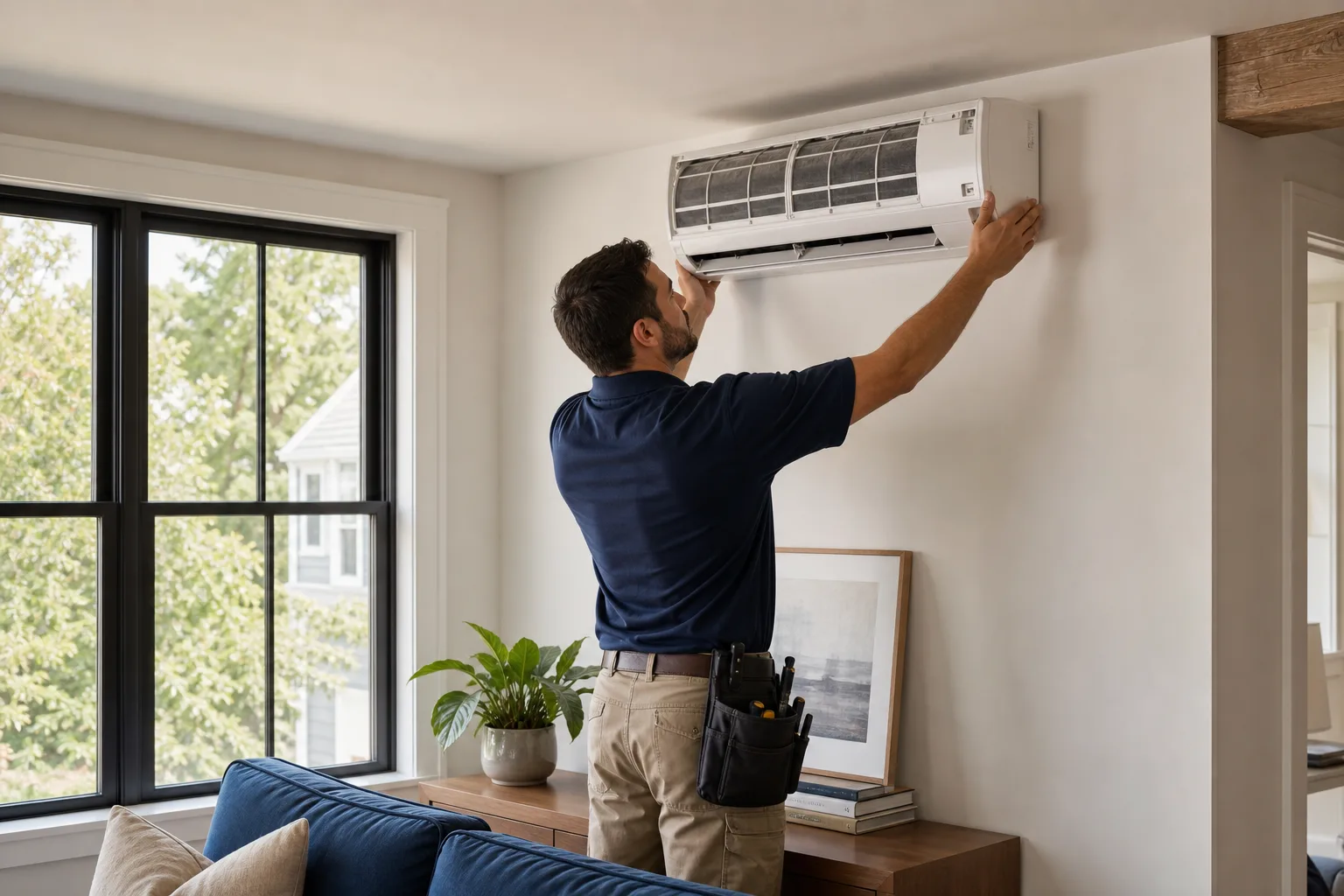
Step 1–2: Preparation and arrival
Before the truck leaves, the rep should know the property's age, roughly when major systems were installed, what the homeowner asked for, and any service history. Five minutes of preparation changes the opening conversation from interrogation to confirmation.
Arrival sets tone: confirm the agenda ('today I'll inspect the system, walk the house with you, and leave you exact options with pricing'), and ask who else is part of the decision. Discovering a missing decision-maker at minute 80 is the most preventable lost sale in the industry.
Step 3–4: Discovery and the guided walkthrough
Discovery is six to eight questions asked at the table before touching anything: what prompted the call, what's bothering them about the current system, how long they plan to stay in the home, and whether comfort, cost, or resale drives the decision. The answers decide which good-better-best tiers make sense.
Then walk the home with the homeowner, not around them. Narrate what you see, photograph everything notable, and flag related issues from your pairing map. Each photographed finding becomes proof in the proposal and a natural cross-sell anchor.
Step 5: Present options, not a number
Build the proposal in the home, on a screen the homeowner can see. Three tiers work because they move the question from 'should we do this' to 'which one fits us.' Anchor high, but make every tier genuinely sensible — a stripped 'good' option that no one should buy poisons trust in the other two.
- Good: solves the presenting problem with quality parts and labor.
- Better: adds efficiency, warranty, or the most natural paired project.
- Best: the full bundle — system, related upgrades, longest protection.
Step 6: Put financing beside every tier
Homeowners do not compare project prices; they compare monthly obligations. Showing each tier with a financed monthly figure beside the cash price lets a $18,000 'best' option compete with a $9,000 'good' option on a $130-versus-$71 monthly basis — a conversation about value instead of sticker shock.
Step 7: Close on logistics, then follow up through a portal
The close is a calendar question: 'If you go with Better, we can have the crew here Tuesday — does morning or afternoon work?' If the homeowner needs time, do not leave a paper quote that dies on the fridge. Send a portal link where they can re-read options, see the photos, ask questions, and sign — and where you can see whether they ever opened it. That visibility is what separates follow-up from hoping.